Introduction: Why Stability Matters in Modern Construction
Workers safety and structure safety is always crucial in large infrastructures that are supported by scaffolds. Effective scaffold bracing and anchoring techniques help to prevent structural movements and other environmental loads during the construction work.
Complex projects usually consist of tall façades and heavy equipment along with high wind exposure. Any weak or improper bracing pushes the complete structure into danger due to instability. In such cases engineers and contractors are expected to follow proven scaffold anchoring best practices so that the infrastructure remains compliant with the safety standards.
This brings us to the point where having a fundamental knowledge of how the bracing systems and anchoring strategies are essential for designing scaffolds that remain secure throughout the construction process.
How Bracing Creates Structural Strength in Scaffold Systems
The foundation of the scaffolding system is based on the bracing that is designed to resist lateral movements and maintain geometric stability. The heavy loads are distributed across the scaffold frame through proper diagonal and horizontal bracing patterns. It also helps in reducing the stress concentration and improving overall rigidity.
One of the most widely used solutions is the triangle bracing configurations approach. This formation provides superior resistance against deformation which is usually caused by wind forces, loads from workers and moving equipment on the structure.
Another supporting formation is made through a zig zag diagonal bracing sequence. This type of structure helps to spread the heavy load evenly and maintains the flexibility for various layouts.
Why Anchoring Plays a Critical Role in Scaffold Safety
Bracing is generally used to stabilize the internal structure of scaffold, however anchors are used to secure them to the supporting structure. When engineers follow the scaffold anchoring best practices they ensure that the permanent structure is capable of holding load through braces and ledgers.
For the proper installation, anchor point selection and proof testing must be carried out on priority basis. Similarly, engineers should also evaluate wall materials, structural strength, and load transfer capacity before installing load resisting scaffold anchors.
Load capacities can also be analysed through anchor proof load testing to confirm that anchors will perform safely throughout the construction process.
The Science Behind Tie Spacing and Placement
In order to control the lateral movements that prevents the structural sways it is important to understand the correct scaffold tie spacing and placements. Ties connect the scaffold system to the building structure at a calculated distance and act as a lateral restraint structural ties.
The spacing between the ties can also be reviewed through tie frequency tables which are prepared by calculating scaffolding height, load condition and environmental exposure. By carefully positioning ties at critical connection points, designers can improve scaffold resistance to wind loads and maintain proper alignment across multiple scaffold bays.
Bracing Patterns That Improve Lateral Stability
In order to create a rigid structural system it is recommended to follow a scaffold lateral stability strategies which recommends combining multiple bracing elements together. Some of the bracing elements that work together to prevent horizontal displacement and twisting includes diagonal braces, ledger braces, and façade bracing.
Another technique is to implement horizontal ledger bracing strategies to reinforce scaffold rows across longer elevations. These braces help distribute loads evenly and maintain alignment between vertical standards.
In addition, node point bracing connection methods ensure that braces intersect at strong structural joints.
Designing Temporary Works for Safe Scaffold Restraint
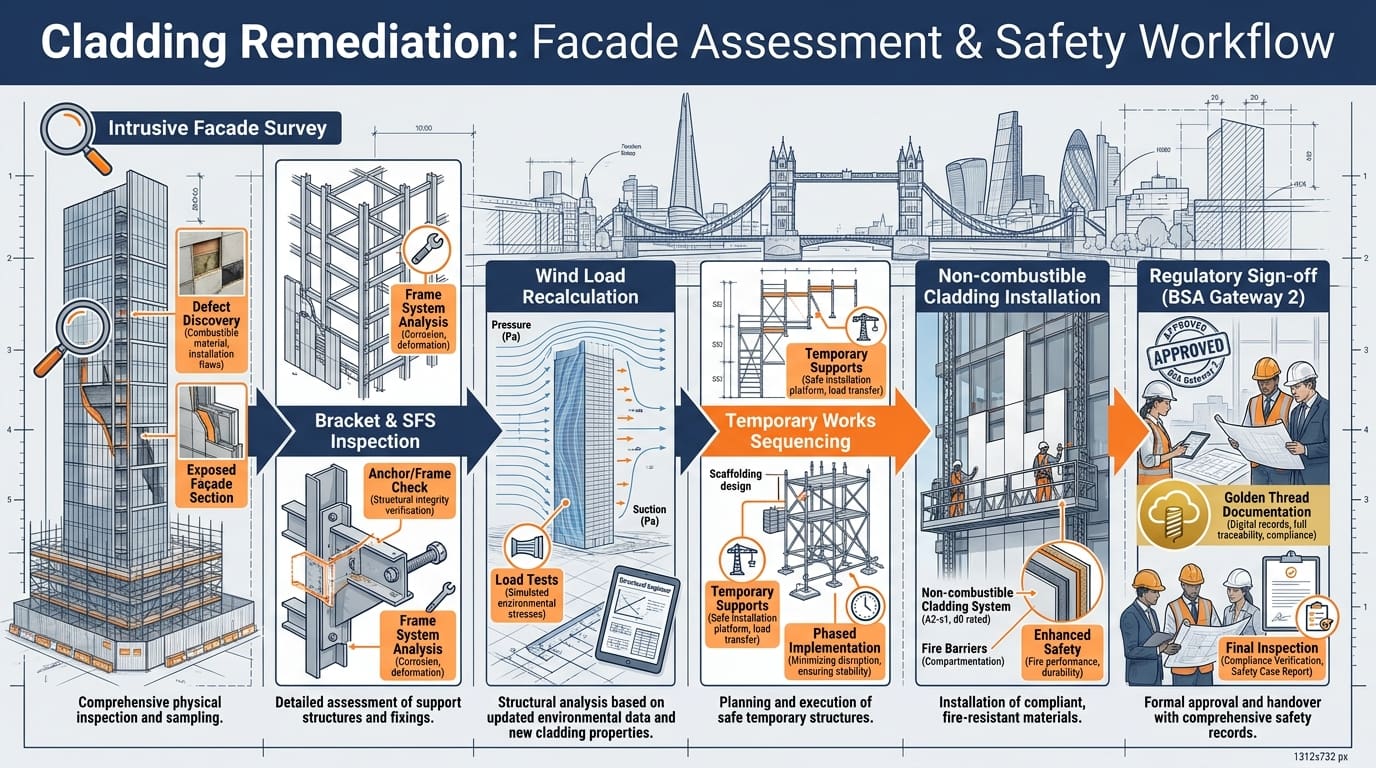
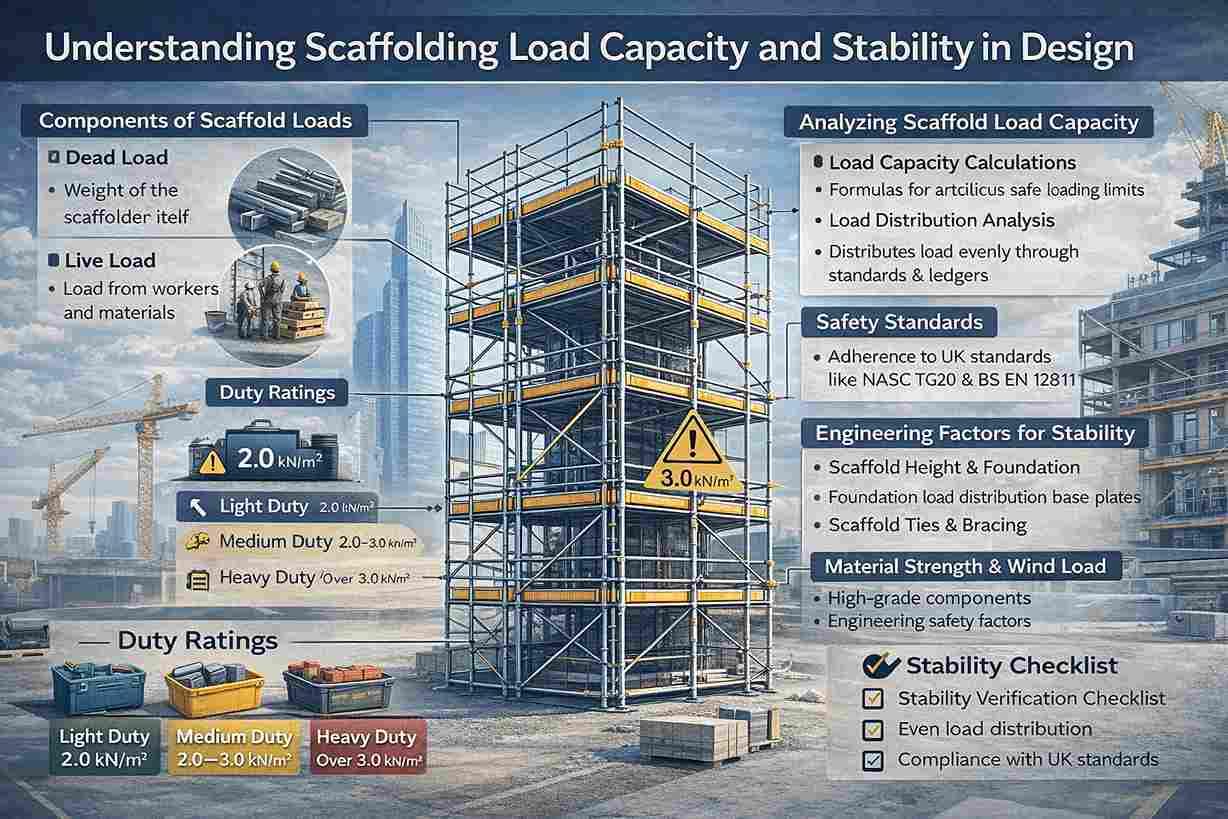
Before initiating the modern construction projects, detailed planning for temporary works scaffold restraint design is required. Different factors that engineers must consider when designing the scaffold system include environmental forces, worker loads, equipment weight, and interaction with the surrounding structure.
Special attention is given to façade bracing requirements for tall buildings or infrastructure structures. Adequate bracing ensures that scaffolds remain stable during strong wind conditions or uneven load distribution.
Adhering to tie and brace compliance standards UK is essential during this process. This also ensures that scaffold systems meet safety regulations and maintain structural performance.
Ensuring Proper Installation and Verification
If someone is looking to make a safe and best scaffold design then he needs to consider different factors. One must follow strict procedures to ensure that installation is carried out according to the engineering drawings.
A comprehensive scaffold stability verification checklist should be used during inspections. This checklist ensures that brace couplers are tightened correctly, anchors are installed at approved locations, and tie spacing meets engineering requirements.
Similarly, meeting brace coupler connection standards is particularly important because poorly secured couplers can compromise the entire bracing system.
Conclusion: Strengthening Scaffold Safety Through Smart Design
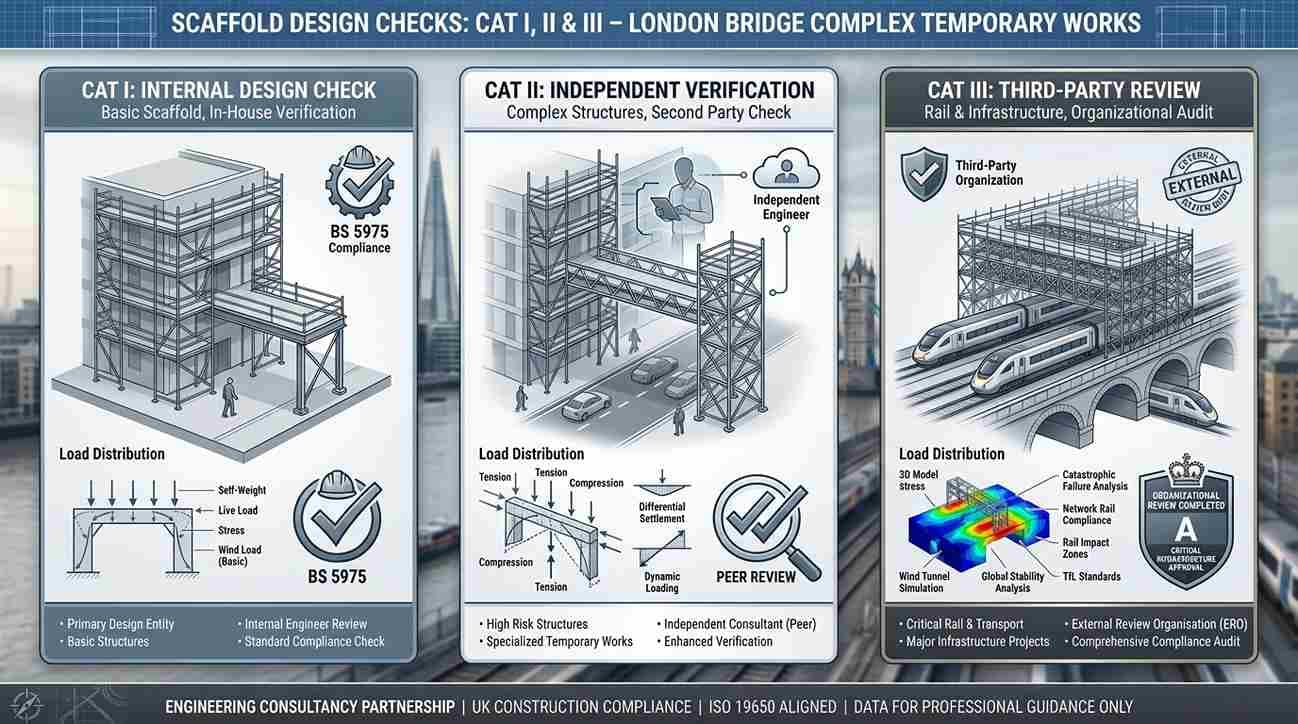
Regardless of the complexity of the construction project it is important to follow scaffold bracing and anchoring techniques. Any organization planning to undertake a large-scale construction project must emphasize professional scaffold design reviews and anchoring systems. With the right planning and engineering expertise, they can ensure safe and reliable scaffolds throughout the project, right from the beginning to completion.