Introduction
Understanding scaffold regulations London is crucial for every construction business and site manager because non-compliance can lead to project delays. Someone who is planning to initiate the construction work must follow scaffold safety standards UK to ensure that workers are protected and the scaffolding systems remain structurally sound throughout their use. With evolving standards and rigorous enforcement by regulatory bodies this blog helps anyone to gain the latest requirements and expectations for scaffold compliance.
Why Regulations Matter
Following the scaffolding compliance requirements isn’t just about fulfilling the legal responsibility but it ensures the project success by keeping the workers safety as a top priority. The major incidents related to scaffolding collapse results in falls and severe injury to workers. So it becomes a legal and ethical imperative to implement and follow the available standards to minimize the risks. Workers who are following these guidelines can work in a safe manner that not only reduces the downtime but also helps the company to build a reputation for safety excellence.
HSE Scaffold Guidelines
The Health & Safety Executive (HSE) scaffold guidelines form the cornerstone of scaffolding compliance in London and across the UK. The HSE mandates that all scaffolding must be inspected regularly by a competent person during the construction work. This inspection can be usually done at least after every seven days during use and during any condition that could compromise structural integrity. These inspections must identify defects, corrective actions, and be documented to demonstrate due diligence. The guidelines further emphasise that only trained and competent personnel should erect, alter, or dismantle scaffolding to prevent hazards arising from incorrect assembly or unsafe methods.
Design Responsibilities and Standards
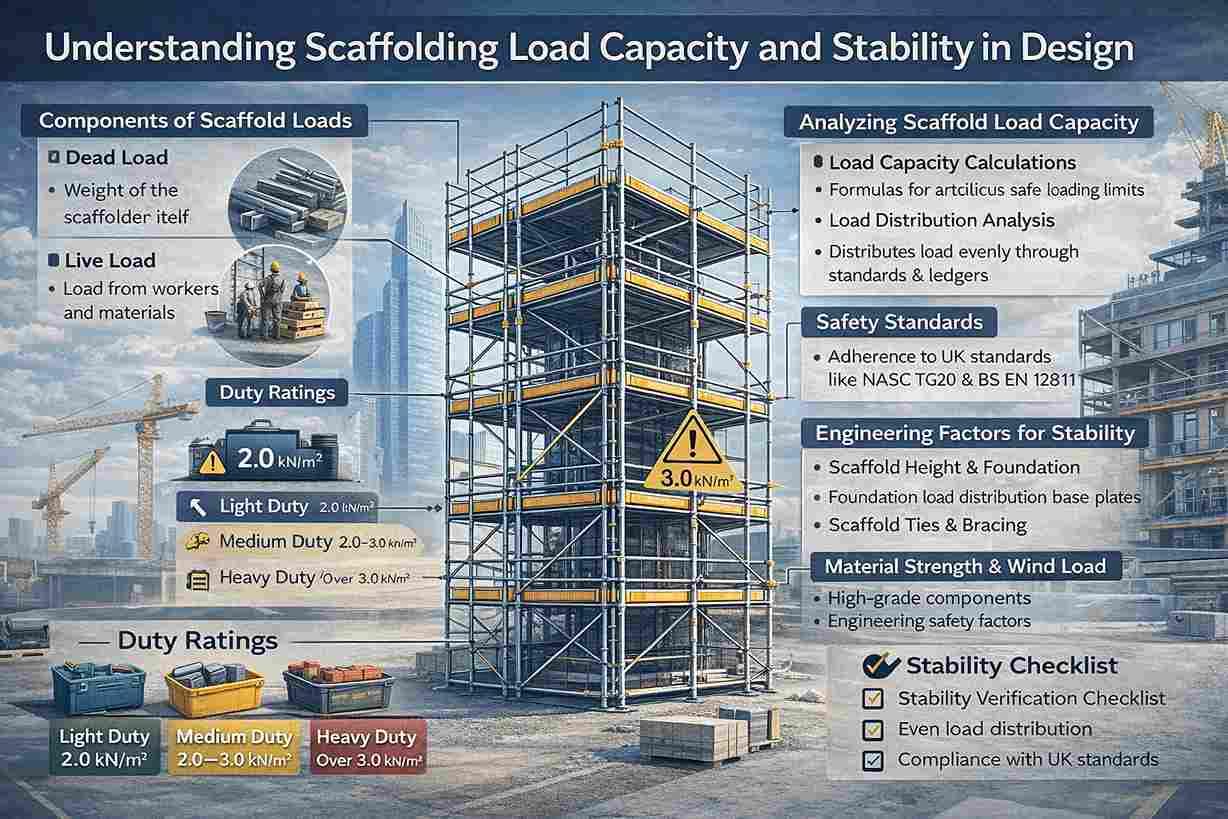
Meeting scaffold design regulations London means ensuring that every scaffold structure is planned with safety and purpose in mind. Under the Work at Height Regulations 2005, scaffolds that fall outside recognised standard configurations require bespoke design calculations produced by a competent designer or qualified structural engineer. Standard configurations might follow industry guidance such as NASC TG20 however, if the engineers are working on complex structures then special attention should be given to address specific loads, environmental forces, and site constraints. Designs that are finalized with careful planning and research will reduce the risk of structural failure and support a proactive approach to safety.
Temporary Works Compliance UK
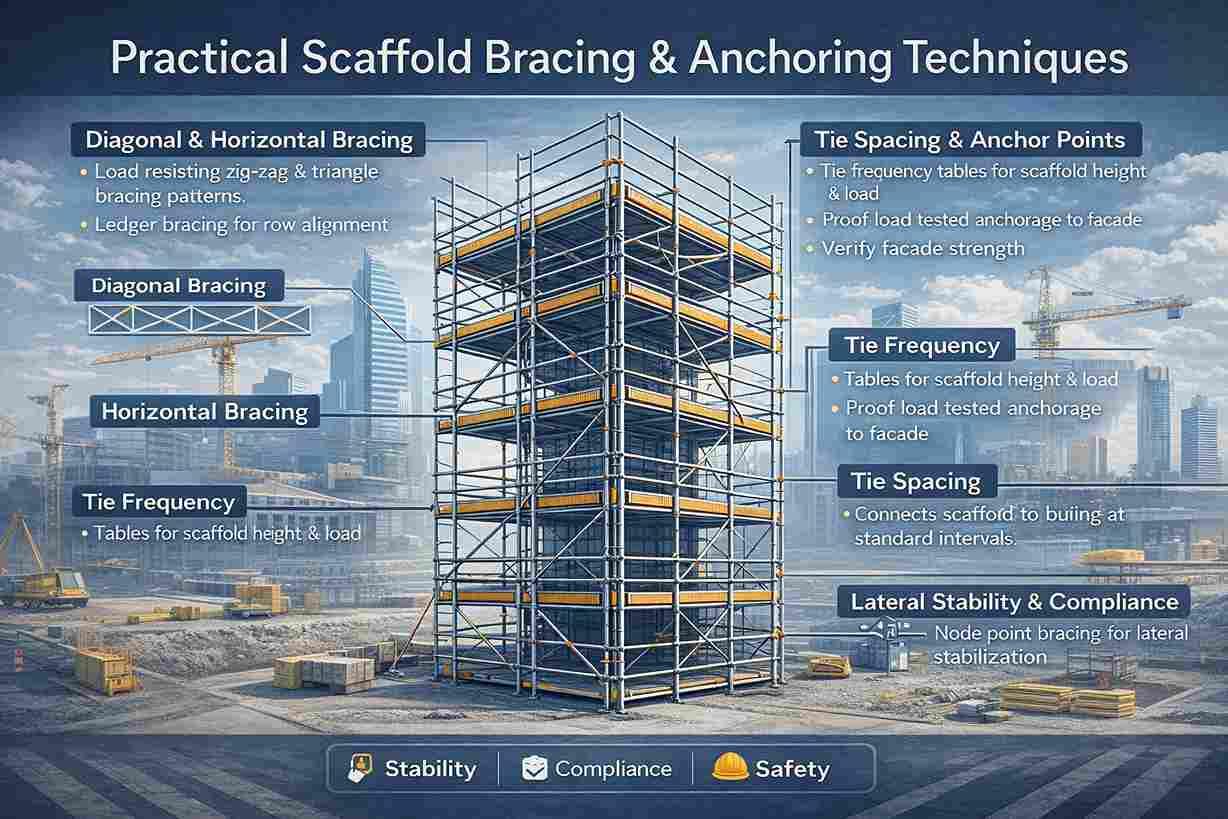
Scaffolding typically comes under the temporary works, it sounds very ordinary but temporary works compliance UK emphasizes that all aspects of scaffold planning, documentation, supervision, and inspection meet defined regulatory frameworks. Temporary work compliance requires assigning responsible personnel for supervision and design checks. It is under his responsibilities to maintain the method statements and risk assessments to ensure all design documentation aligns with safety expectations. This includes documentation of load calculations, tie-in positions, and stability measures that is tailored to the specific build context.
BS 5975 Scaffolding Standards
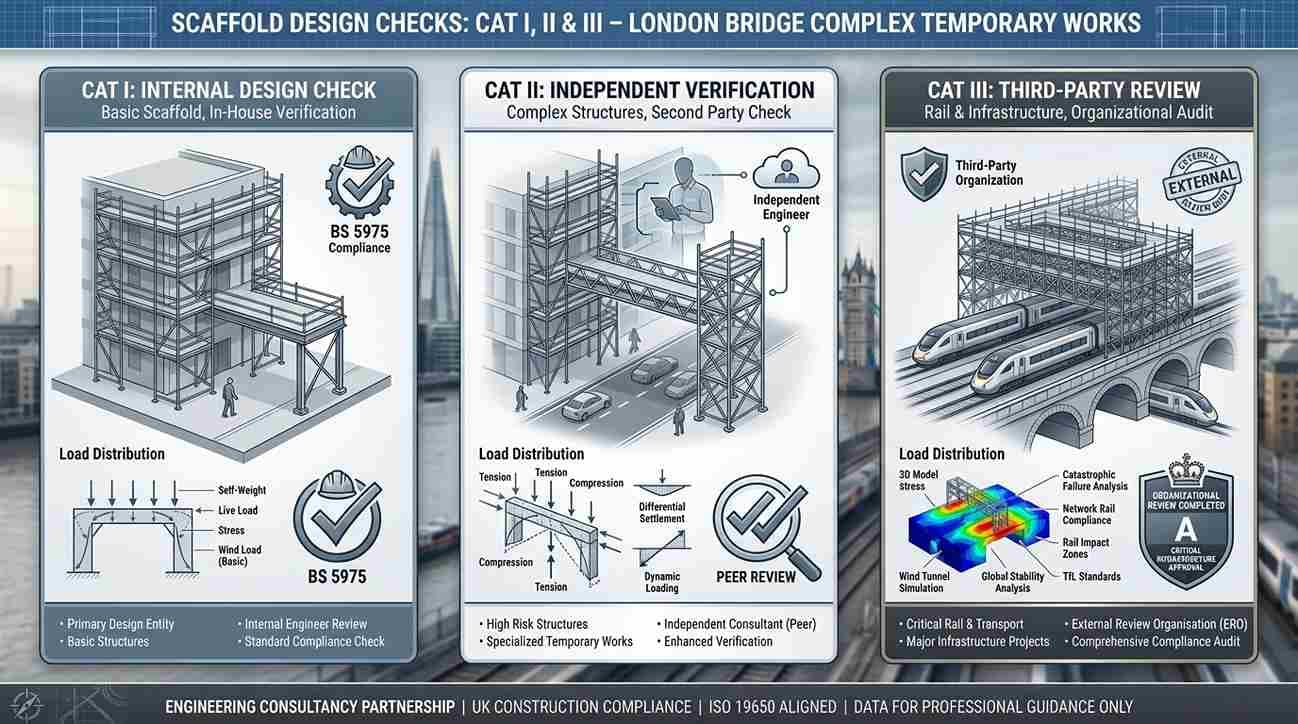
BS 5975 scaffolding standards are critical when the scaffold is treated as a temporary supporting structure with unique or complex criteria. These British Standards guide how temporary works like scaffolds should be managed, including design checks, inspection frequencies, and responsibilities for risk mitigation. Incorporating BS 5975 ensures that scaffolding meets a recognised level of structural and safety integrity, particularly in high-risk or bespoke scenarios where off-the-shelf guidance does not apply.
Inspection Requirements On Site
Regular recording of the scaffold has been inspected is a central part of regulatory compliance and is considered essential in maintaining scaffold inspection requirements on construction sites. Inspection must occur before initial use, at least once every seven days, and after events such as adverse weather, structural alterations, or high load situations. The inspections must be conducted by a genuinely competent inspector whose training and experience are appropriate to the scaffold’s complexity, and all findings must be recorded and acted upon promptly. These inspections protect workers and serve as an auditable safety trail in case of enforced reviews.
Scaffold Risk Assessment UK
There is always a risk of falling materials, unstable ground conditions and environmental factors as the construction work continues to build the elevated floors of the building. To mitigate these risks it is wiser to conduct a scaffolding risk assessment UK that helps to evaluate the risks and implement the controlled measures where possible. Moreover, method statements supplement risk assessments to get the clear picture of tasks that need to be carried out safely and necessary protective measures required for implementation.
Scaffold Engineer Responsibilities
A scaffold engineer’s responsibilities are not limited to risk management planning but they are also engaged in producing robust designs and approving the complex scaffold configuration. Engineers must also ensure that structural elements meet load requirements and the overall scaffold configuration complies with both regulatory and site-specific demands. As in certain cases the engineers verify and stamp the scaffold plans so they also held accountable in case of any incident related to human life and compliance status.
Construction Site Safety Regulations
In London, construction site safety regulations govern how scaffolding interacts with overall site safety planning. This entails the following
- Ensuring that the scaffolding does not hamper the route to the site for use in case of an emergency.
- The pedestrian route is protected.
- The barriers are placed to ensure that debris does not cause danger to employees or passers-by.
The culture of safety on a London construction site is thus extended to the use of a scaffold and these safety measures are based on the nature of the site.
Scaffold Safety Standards UK
Scaffold safety standards UK are developed by following different regulations such as HSE expectations, British Standards, and construction industry codes of practice. These standards not just cover the physical characteristics of scaffold assembly and inspection but also include the information related to the workers involved in the construction, necessary documentation and maintenance timelines. These standards also emphasize the worker training and protective gadgets to maintain the workers safety. Staying current with national developments ensures that scaffolding operations remain aligned with the highest safety benchmarks.
Training and Competence
The training of workers and involved labor in the construction site is often overlooked by the construction companies. The competence of the workers should be validated through recognised training schemes such as CISRS that covers the role from scaffold builders through to advanced inspectors.
Documentation and Record Keeping
Meeting scaffolding compliance requirements is not just about following the rules but it also involves comprehensive documentation. These documents should have scaffold design certificates, risk assessments, inspection logs, method statements, handover certificates, and compliance sheets. Robust record keeping not only assists with daily management but also serves as critical evidence in case of HSE inquiries or audits.
Conclusion
In today’s demanding environment there is a need to understand and implement scaffold regulations London so that the workers should be protected and avoid costly non-compliant practices. Engaging the service of competent professionals, documentation of compliance, and embedding scaffold safety within wider site management form a regulatory necessity, therefore, a strategic advantage for any business. Before initiating the construction project, always seek competent professionals for tailored support and compliant scaffold solutions in meeting current safety benchmarks.